
What you'll learn
By the end of this guide, you'll have a complete, gentle daily skin care routine at home naturally — the exact steps, in the right order, with a short list of plant-based ingredients that actually earn their place. I'll walk you through cleansing, toning, treating, moisturizing, and protecting your skin, plus how to adapt the routine for morning and evening, and what to do weekly for a little extra glow.
There's no ten-shelf regimen here and no promises your skin will change overnight. What you'll get is a calm, repeatable habit — the kind that quietly, steadily makes your skin feel like itself again.
Why a simple, natural routine is worth building
A few years ago, my bathroom shelf held twenty-two bottles. I know because I counted them the morning my skin, ironically, looked worse than it had in a decade — pink at the cheeks, tight across the forehead, and inexplicably breaking out along my jaw. The lesson was slow but unmistakable: my skin didn't want more products. It wanted fewer, gentler, and better-chosen ones.
A natural skincare routine at home isn't about being anti-science. Some of the most researched actives in skincare — vitamin C, niacinamide, azelaic acid — are extracted or inspired by nature. What "natural" really means, at least in the way I use it in this guide, is ingredient-aware: choosing formulas built around plant oils, botanical extracts, humectants, and gentle acids, and skipping unnecessary fragrance, harsh sulfates, or drying alcohols. The result is a routine that respects your skin barrier instead of overworking it.
The other quiet benefit? Simplicity is sustainable. A routine you can do in three minutes on a tired Tuesday is a routine you'll still be doing in six months. That consistency is where results actually come from.
"Skin doesn't need more products. It needs fewer, gentler, better-chosen ones — and the patience to let them work."
Things you'll need
Before you start, gather the essentials. You don't need to buy everything at once — begin with a cleanser, moisturizer, and SPF, then add the rest as you go. Where I've linked a favorite kit, you can find it here .
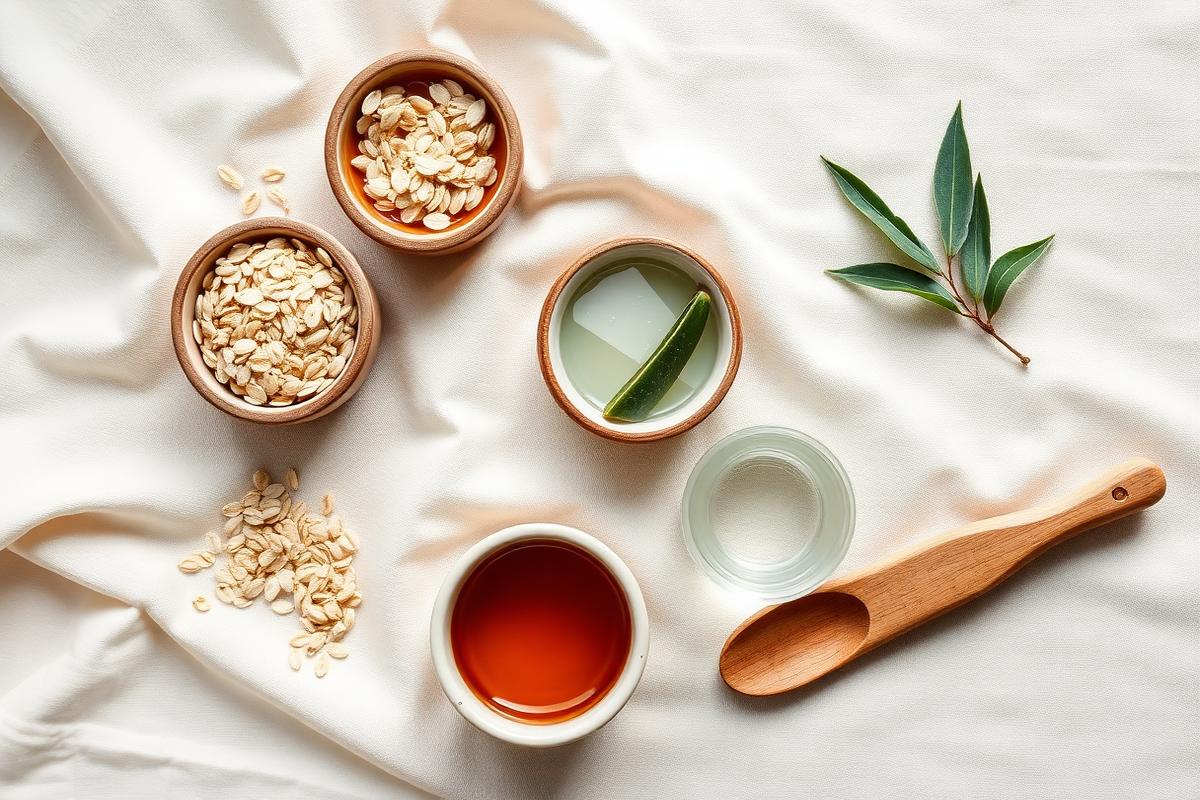
- Gentle natural cleanser (oat, honey, or cream-based)
- Alcohol-free toner (rosewater or witch hazel)
- A natural serum (vitamin C, niacinamide, or rosehip)
- Plant-based moisturizer (shea, aloe, squalane)
- Broad-spectrum mineral SPF 30+ for daytime
- A pure facial oil (jojoba, rosehip, or argan)
- Soft muslin or cotton cloth
- Clean fingertips and a little patience
Understanding your skin first
Before you buy a single product, spend a few minutes getting to know your skin. Wash your face with only warm water in the evening and skip everything else. In the morning, notice how it feels: tight and papery, comfortable and matte, shiny in the T-zone but normal on the cheeks, warm and pink after a hot shower? That's your starting map.
The five common skin types
- Dry — feels tight, may flake, drinks up moisturizer.
- Oily — visible shine within an hour or two of cleansing.
- Combination — oily through the T-zone, normal or dry elsewhere.
- Sensitive — reacts easily; stings, blushes, or breaks out with new products.
- Normal — comfortable most of the time, occasional mild dryness or oil.
Your skin type isn't a permanent label — it shifts with the seasons, hormones, stress, and travel. Check in with it every few months and be willing to adjust.
Build your natural routine
Below is a small reader tool I put together to make this practical. Choose your skin type and the one goal that matters most to you right now, and it'll suggest an ordered routine using the kinds of natural ingredients I'd reach for. Treat it as a starting point, not a prescription — your skin gets the final word.
Build your natural routine
Your normal skin, hydration routine
- 1Cleanse. Simple honey or milk cleanser, morning and night
- 2Tone. Rosewater or chamomile hydrosol
- 3Treat. Hyaluronic acid + aloe serum on damp skin
- 4Moisturize. Everyday plant-butter moisturizer
- 5Protect (AM). Broad-spectrum mineral SPF 30+
- 6Nourish (PM). A few drops of jojoba oil pressed in
The step-by-step routine
Here's the full order, morning and night. Each step includes what it does, how to do it well, and which natural ingredients I keep returning to. If you're new to skincare, this is your ready-made recipe — you can follow it exactly.
1Cleanse — start with a clean canvas
What it does: lifts away sweat, sunscreen, and the day, without stripping your skin.
Wet your face with lukewarm — not hot — water. Warm a small amount of cleanser between your palms, then massage it into your skin in slow, upward circles for about thirty seconds. Rinse thoroughly and pat (never rub) dry with a soft towel. Cleanse twice a day: once in the morning to freshen, once at night to remove the day.
Natural ingredients I love here: oat (calming), honey (naturally antibacterial and humectant), and aloe for a gel-textured cleanser. If your skin is dry or sensitive, avoid anything that foams aggressively. My current cleanser is here .
2Tone — refresh and rebalance
What it does: adds a thin layer of hydration and preps skin to absorb what comes next.
Skip the astringents you might remember from the 1990s. A modern natural toner is a lightweight, alcohol-free mist or liquid — think rosewater, chamomile hydrosol, or gentle witch hazel (alcohol-free formulations only). Press it into damp skin with your palms or a reusable cotton round. This step is optional in a minimalist routine, but it's the one I'd add first once cleanser–moisturizer–SPF feels like habit.
3Treat — one thoughtful serum
What it does: delivers a targeted active to your specific concern.
Serums are where a natural routine gets personal. Pick one that maps to your main goal and give it a fair, uninterrupted eight-week run before you decide whether it's working.
- For dullness / uneven tone: stabilized vitamin C or licorice root.
- For dehydration: hyaluronic acid (plant-derived) layered on damp skin.
- For redness / sensitivity: centella asiatica (cica) or oat extract.
- For fine lines: cold-pressed rosehip seed oil or gentle bakuchiol.
- For oiliness / congestion: niacinamide with green tea.
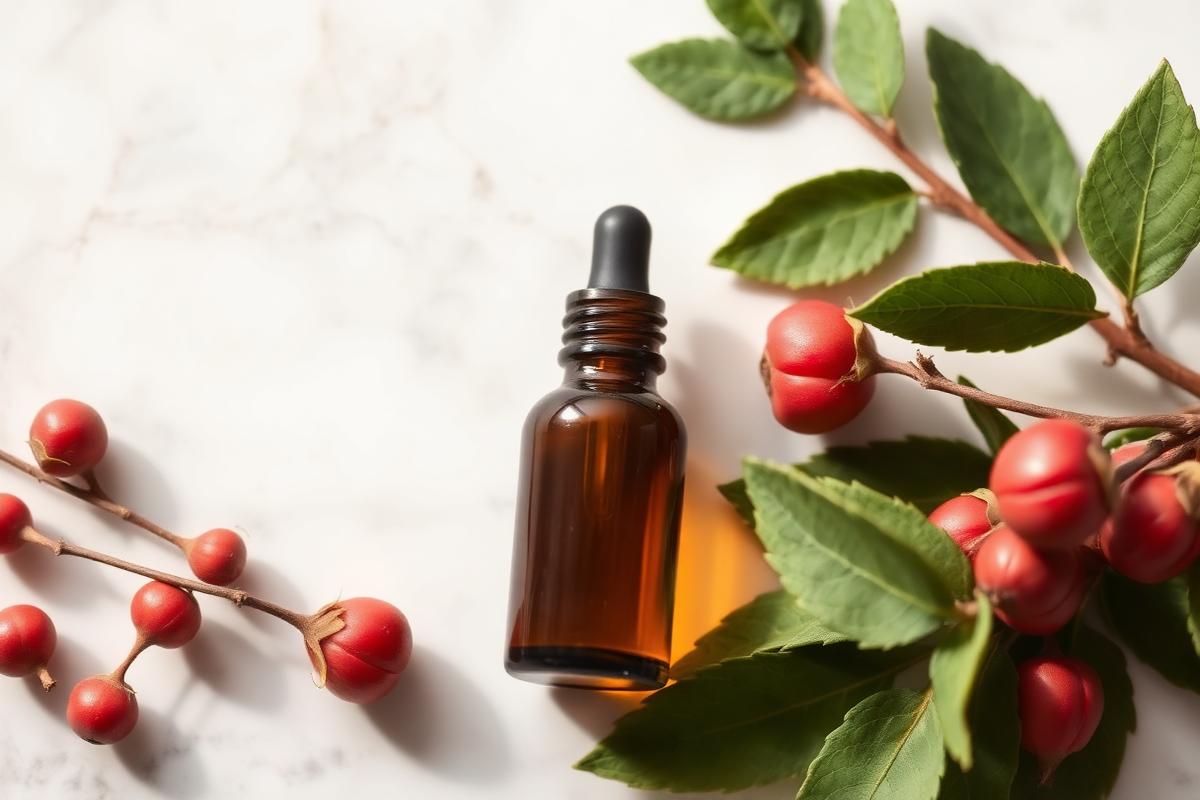
Apply two or three drops to slightly damp skin, press in with your fingertips, and wait a minute before moving on. The serum I always come back to .
4Moisturize — seal in what you've done
What it does: reinforces your skin barrier and keeps hydration from escaping.
Even oily skin needs moisture; when you skip it, oil glands often overproduce to compensate. Choose a texture that matches your skin: gel-cream for oily and combination, a medium lotion for normal, a richer shea or ceramide cream for dry. Warm a pea-sized amount between your fingertips, then press — don't drag — it onto your face and neck.
5Protect (morning) — the one non-negotiable
What it does: shields your skin from the UV that causes the vast majority of visible aging.
If you do one thing on this whole list, do this one. A broad-spectrum mineral SPF 30 or higher, applied every morning as the last step of your routine, will do more for your skin over the next decade than any serum. Look for zinc oxide or non-nano titanium dioxide as the active ingredients — gentle, effective, and photostable. Reapply every two hours if you're outside for the day.
The best sign your SPF is working isn't something you'll see in the mirror tomorrow — it's the freckles that don't appear, the fine lines that stay put, and the even tone you'll still recognize a decade from now. Make it the one step you never negotiate.

6Nourish (evening) — oil, mask, and rest
What it does: repairs and replenishes overnight, when skin does most of its renewing.
At night, skip SPF and swap in something nourishing. Three or four drops of rosehip, argan, or squalane pressed over your moisturizer is often enough. Twice a week, a gentle overnight mask — a spoon of raw honey and a splash of aloe left on for twenty minutes — is a lovely, humble treat. Then, most importantly, go to bed. Sleep is a skincare step.
Weekly extras: exfoliation & masks
Once or twice a week, layer in a gentle exfoliant to soften texture and help other products absorb better. On natural skincare, I lean toward enzyme exfoliants (pumpkin or papaya) or a low-percentage lactic acid derived from fermented sugars. Skip harsh scrubs with crushed shells — they can create microtears you can't see.
For masks, keep it simple: an oat and honey mask calms; a green clay mask draws out congestion; a plain yogurt mask brightens and softens with natural lactic acid. Leave any mask on for ten to fifteen minutes, then rinse with lukewarm water and continue with moisturizer.
Morning vs. evening: how the routine differs
The steps and their order stay the same; only the final step changes. Think of it as two versions of the same ritual — one for protection, one for repair.
- Cleanse
- Tone
- Treat (antioxidant serum)
- Moisturize
- Mineral SPF 30+
- Cleanse (or double cleanse if wearing SPF/makeup)
- Tone
- Treat (repair serum or bakuchiol)
- Moisturize
- A few drops of facial oil